A steering problem can turn an ordinary drive across Las Vegas into a stressful one, especially in heavy traffic on I-15, US-95, or busy surface streets. Heat, road wear, dust, and daily stop-and-go driving can all add strain to steering and suspension components over time.
Quick answer: Basic steering checks such as monitoring power steering fluid, checking tire pressure, and noticing changes in steering feel are reasonable DIY tasks. Actual steering repairs are usually better left to a professional because the system directly affects vehicle control and safety. If the wheel feels loose, becomes difficult to turn, pulls unexpectedly, makes grinding or clunking noises, or steering fluid is leaking, a professional inspection is the safer next step.
What local drivers should know
A sudden change in steering effort, response, or stability should be investigated rather than ignored.
Extreme Southern Nevada heat can accelerate deterioration of rubber components, seals, hoses, and fluids.
Rough pavement, potholes, curbs, and road debris around Clark County can contribute to steering or suspension wear.
Checking tire pressure and looking for visible leaks can help identify a problem, but those checks do not replace diagnosis.
Steering components are safety-critical, so repairs that involve disassembly, hydraulic systems, electronic steering, or alignment should generally be handled professionally.
Why Do Steering Problems Matter for Las Vegas Drivers?
Steering problems matter for Las Vegas drivers because reliable vehicle control is essential in high-speed freeway traffic, congested intersections, and extreme summer conditions. A small amount of looseness or delayed steering response can become much more noticeable when changing lanes, avoiding road debris, or maneuvering through dense traffic.
Southern Nevada driving also puts vehicles through demanding conditions. Summer pavement temperatures can be severe, while dust and dry conditions are common throughout the valley. Drivers traveling between Summerlin, Paradise, Spring Valley, North Las Vegas, and Henderson may encounter a combination of freeway miles, stop-and-go traffic, construction zones, and uneven pavement.
Mobile Mechanics Las Vegas helps local drivers address vehicle problems where mobile service is appropriate. After this first mention, we focus on helping customers understand what may be happening, which checks are reasonable, and when a steering concern needs professional attention.
What Local Conditions Can Contribute to Steering Wear?
Local steering wear can be influenced by extreme heat, rough roads, frequent driving, dust exposure, and impacts from potholes or curbs. These conditions do not automatically cause steering failure, but they can increase stress on components that are already aging or worn.
In Southern Nevada, prolonged heat can be hard on rubber boots, seals, hoses, and certain fluids. Dry conditions and road dust can also collect around exposed suspension and steering areas.
Road conditions matter as well. Hitting a pothole, curb, or broken pavement can affect tie rods, steering linkage, wheels, tires, or alignment. Drivers who regularly travel construction-heavy routes around Clark County may notice pulling, uneven tire wear, or changes in steering feel after a significant impact.
These are general mechanical observations rather than claims that every local vehicle will experience the same problems.
How Can a Steering Problem Affect Your Vehicle?
A steering problem can affect control, tire wear, handling, driver confidence, and the ability to respond quickly to changing road conditions. Depending on the cause, a vehicle may become harder to turn, wander in its lane, pull to one side, or respond inconsistently to steering input.
Some steering concerns are connected to other systems. A damaged tie rod can affect alignment. Incorrect tire pressure can make steering feel unusual. Worn suspension components may create symptoms that feel like a steering problem.
Because several issues can produce similar symptoms, replacing a part based only on a noise or steering sensation can lead to unnecessary expense without solving the original problem.
What Are the Warning Signs of Steering Trouble?
Common steering warning signs include unusual resistance, looseness, pulling, fluid leaks, noises, vibration, and delayed response from the steering wheel. Drivers should pay particular attention when a symptom appears suddenly or becomes noticeably worse.
Watch for:
The steering wheel becoming unusually hard to turn.
Excessive free play or looseness in the steering wheel.
The vehicle wandering or pulling while driving on a reasonably level road.
Clunking, popping, whining, squealing, or grinding during turns.
Visible fluid underneath the front portion of the vehicle.
Steering-wheel vibration that was not present before.
Uneven or unusually rapid tire wear.
A steering or power steering warning light appearing on the dashboard.
A warning sign does not identify the failed component by itself. Diagnosis is what separates a tire, alignment, suspension, hydraulic, or steering-system issue.
When Should You Call a Professional for Steering Repairs?
You should call a professional when steering performance changes noticeably, a leak is present, parts appear loose or damaged, warning lights appear, or the vehicle no longer feels predictable to control. Basic observation is useful, but steering-system disassembly and repair are generally not good trial-and-error DIY projects.
A driver can safely check tire pressure according to the vehicle’s recommended specifications, inspect the ground for obvious leaks, and note exactly when noises or handling changes occur.
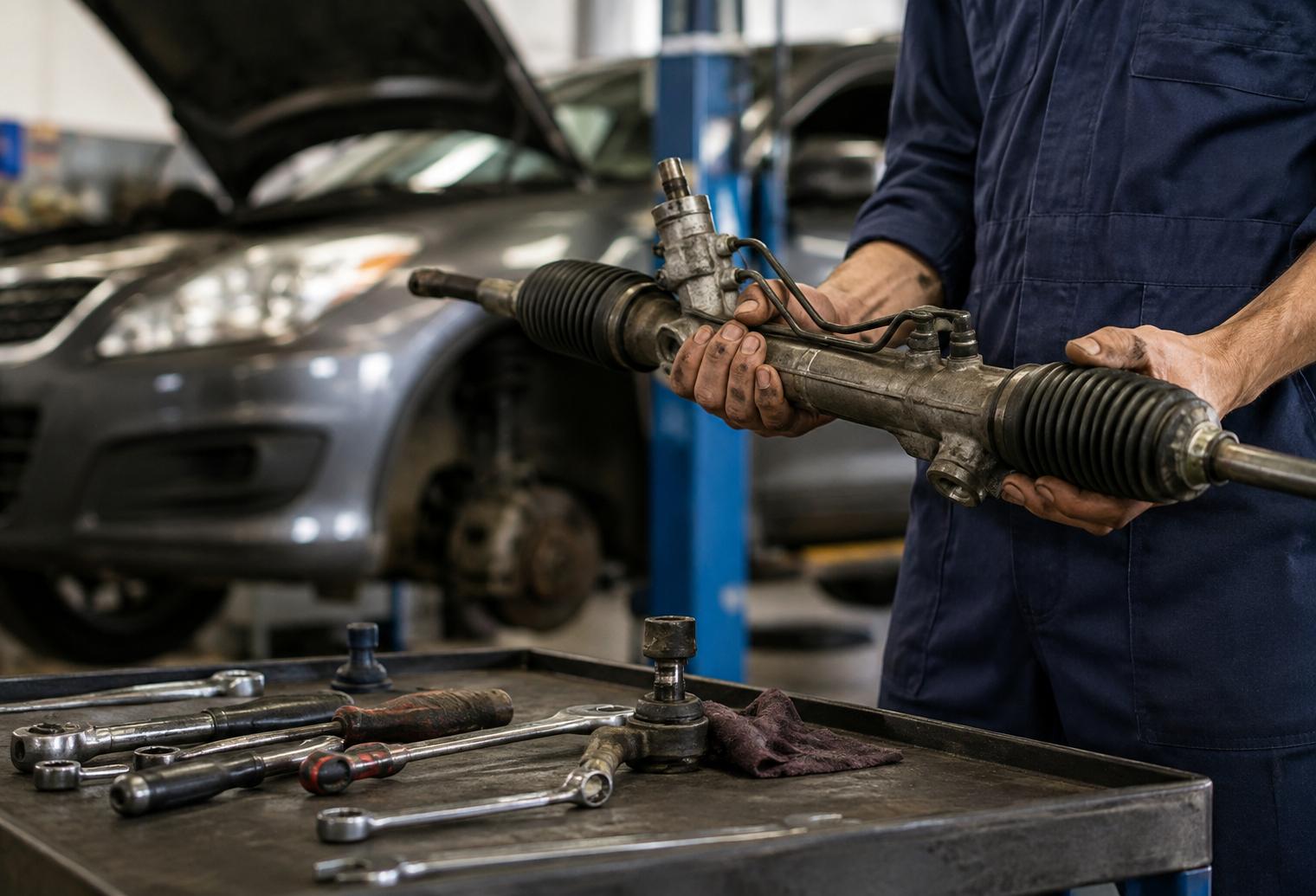
Professional help becomes more appropriate when the repair could involve tie rods, a steering rack, power steering hoses, a pump, electronic power steering components, steering linkage, or related suspension parts. If the vehicle feels unsafe to control, avoid treating the trip to a repair facility as a test drive.
What Are Common Causes of Steering Problems in Southern Nevada?
Common causes of steering problems include tire issues, alignment changes, worn linkage, leaking hydraulic components, aging steering parts, and related suspension wear. Local heat and road conditions can contribute to how quickly existing wear becomes noticeable.
1. Tire pressure or tire damage: Low pressure, uneven wear, or a damaged tire can cause pulling and heavier steering.
2. Alignment changes: A pothole or curb impact can alter alignment and make a vehicle pull or feel unstable.
3. Worn tie rods or linkage: Wear in components connecting steering input to the wheels can create looseness, clunking, or inaccurate response.
4. Power steering fluid leaks: Vehicles with hydraulic power steering may become difficult or noisy to steer when fluid is lost.
5. Steering rack or pump problems: Internal steering-system problems can produce leaks, inconsistent assistance, noise, or increased effort.
6. Suspension wear: Ball joints, control-arm components, bushings, and other suspension parts can create handling symptoms that resemble steering trouble.
What Steering Maintenance Can You Do Yourself?
DIY steering maintenance should focus on observation, tire care, fluid checks when applicable, and catching changes before they become larger problems. These simple checks are especially useful before long drives across the valley or during periods of intense summer heat.
Check tire pressure regularly and inspect tires for unusual wear. If your vehicle uses serviceable power steering fluid, check the level according to the owner’s manual and use only the specified fluid type.
Look underneath the vehicle for new leaks and pay attention to changes in steering feel. If you hit a significant pothole or curb, monitor the vehicle for pulling, vibration, an off-center steering wheel, or new noises.
DIY work should stop when diagnosis requires lifting the vehicle, separating steering components, disturbing safety-critical fasteners, working with electronic steering systems, or performing an alignment.
What Results Should You Expect From Professional Steering Repair?
Professional steering repair should aim to identify the actual source of the symptom and restore predictable steering operation based on the condition of the vehicle. The exact repair depends on whether the problem comes from tires, alignment, steering components, suspension parts, hydraulic assistance, or an electronic system.
A proper diagnosis can also uncover related concerns. For example, replacing a worn steering component may be only part of the solution if alignment or tire wear has also been affected.
No legitimate repair should be expected to correct unrelated mechanical problems, which is why diagnosis before parts replacement is valuable.
What DIY Steering Repair Mistakes Should Drivers Avoid?
The biggest DIY steering mistakes are guessing at the failed part, ignoring related components, using incorrect fluids, and continuing to drive despite worsening symptoms. These mistakes can increase repair costs or leave the original safety concern unresolved.
Mistake: Replacing a component because an online video showed similar symptoms. Consequence: Several steering and suspension faults can feel alike. Better approach: Diagnose the source before buying parts.
Mistake: Adding whatever power steering fluid is available. Consequence: Fluid requirements vary by vehicle. Better approach: Verify the manufacturer’s specification first.
Mistake: Assuming pulling always means the steering rack is failing. Consequence: Tire pressure, alignment, tire damage, and suspension wear can also cause pulling. Better approach: Check the complete steering, tire, and suspension picture.
Mistake: Continuing to drive as looseness or steering effort increases. Consequence: A controllability problem can become more serious. Better approach: Arrange an inspection when the vehicle’s handling changes significantly.
What Is a Common Local Steering-Repair Scenario?
A common local scenario is a driver noticing new pulling, vibration, or an off-center steering wheel after striking rough pavement or a pothole. This does not automatically mean a major steering component has failed, but an impact can affect tires, wheels, alignment, steering linkage, or suspension components.
For example, a driver commuting between Henderson and central Las Vegas might notice the vehicle no longer tracks straight after a hard road impact. Checking tire pressure is a sensible first step. If the symptom remains, a professional inspection can identify whether alignment or damaged components are involved.
This is an illustrative local scenario, not a customer case study.
Which Services Can Help Resolve Steering Problems?
Steering problems may require diagnostic service, steering-component repair, suspension inspection, fluid-leak diagnosis, or related mechanical repairs depending on the cause. The right service should follow the symptom rather than assuming a specific part needs replacement.
We can help evaluate vehicle concerns and determine which repairs are appropriate for mobile service. Some situations may require equipment or procedures better suited to a repair facility, particularly when specialized alignment or other shop-based equipment is necessary.
Is DIY Steering Repair Better Than Calling a Professional?
DIY checks are useful for simple observations, but professional diagnosis is the better choice when steering components, vehicle control, or safety are involved. The dividing line is whether the task involves basic monitoring or an actual repair to a system that determines where the vehicle goes.
DIY makes sense for checking tire pressure, observing fluid levels, inspecting for obvious leaks, and documenting symptoms.
Calling a professional makes more sense for persistent pulling, loose steering, leaks, steering noises, damaged linkage, electronic power steering warnings, or any situation where parts must be removed or adjusted.
For most Las Vegas drivers, the potential savings of guessing at a steering repair are difficult to justify if an incorrect repair leaves the original problem unresolved.
What Areas Can Receive Local Steering-Repair Help?
Local steering-repair assistance may be available throughout the Las Vegas area depending on the vehicle, location, and type of service required. Our service area can include communities across the valley, with drivers in areas such as Summerlin, Spring Valley, Paradise, and surrounding Clark County communities seeking help for vehicle concerns.
Drivers in nearby Henderson or North Las Vegas should confirm service availability for their specific location and repair need.
What Can Happen If You Ignore a Steering Problem?
Ignoring a steering problem can lead to worsening handling, uneven tire wear, additional component stress, or a more serious loss of predictable vehicle control. The risk depends on the failed component, but waiting is rarely useful when the symptom is becoming more noticeable.
A minor alignment issue may accelerate tire wear. A leaking hydraulic system can lose additional fluid. Worn linkage may develop more movement. In busy Southern Nevada traffic, predictable steering response matters every time a driver merges, turns, brakes, or avoids an obstacle.
These common steering-repair questions can help Las Vegas drivers decide what they can check themselves and when professional diagnosis is appropriate.
Can I drive with a steering problem in Las Vegas?
You should avoid driving if the vehicle is difficult to steer, unusually loose, unpredictable, or clearly unsafe to control. Minor symptoms still deserve attention because steering problems can worsen. If you are unsure whether the vehicle is safe to move through local traffic, professional guidance is preferable to using a drive as a diagnostic test.
Does Las Vegas heat damage power steering systems?
Extreme heat can contribute to deterioration of fluids, hoses, seals, rubber components, and other aging vehicle parts. Heat alone does not prove why a steering system is malfunctioning, but Southern Nevada conditions can add stress to components. Visible leaks, noise, or increased steering effort should be diagnosed rather than attributed to temperature alone.
Why is my steering wheel suddenly hard to turn?
A steering wheel can become hard to turn because of low tire pressure, a hydraulic power steering problem, a fluid leak, a failed pump, an electronic steering fault, or another mechanical issue. Because some causes can affect vehicle control, a sudden or severe increase in steering effort should be inspected promptly.
Can a Las Vegas pothole cause steering problems?
Yes, a strong pothole or curb impact can affect tires, wheels, alignment, steering linkage, or suspension components. After a hard impact, watch for pulling, vibration, an off-center steering wheel, unusual noises, or changes in handling. Persistent symptoms should be professionally inspected so damaged parts are not mistaken for a simple alignment issue.
Is a power steering fluid leak a DIY repair?
Finding the source of a power steering fluid leak is usually more important than simply adding fluid. A leak may come from a hose, fitting, pump, rack, or another component. Drivers can monitor the fluid level where appropriate, but repairing the leak typically requires proper diagnosis, parts, tools, and safe working procedures.
Why does my vehicle pull on roads around Clark County?
Pulling can result from tire pressure differences, tire wear, alignment problems, steering wear, suspension issues, or road surface conditions. If your vehicle repeatedly pulls on different roads rather than only on a noticeably crowned roadway, check the tires first and consider a professional steering, suspension, and alignment evaluation.
Should I repair steering components myself to save money?
DIY steering repairs can create false savings if the wrong component is replaced or the vehicle requires alignment afterward. Basic checks are worthwhile, but safety-critical components should be diagnosed correctly. For local drivers who depend on their vehicles for commuting across the valley, reliable steering is more important than experimenting with parts.
Do steering repairs always require a repair shop?
Not every steering-related concern necessarily requires traditional shop service. Some inspection and repair work may be suitable for mobile service, while alignment procedures or certain specialized repairs can require shop equipment. We can help determine what type of service makes sense based on the symptoms, vehicle, and suspected problem.
Make Your Next Drive Feel Predictable Again
Addressing steering concerns early can help protect predictable handling on Las Vegas streets and freeways. We focus on identifying the problem, explaining the available repair path, and helping local drivers determine whether mobile service fits the job.
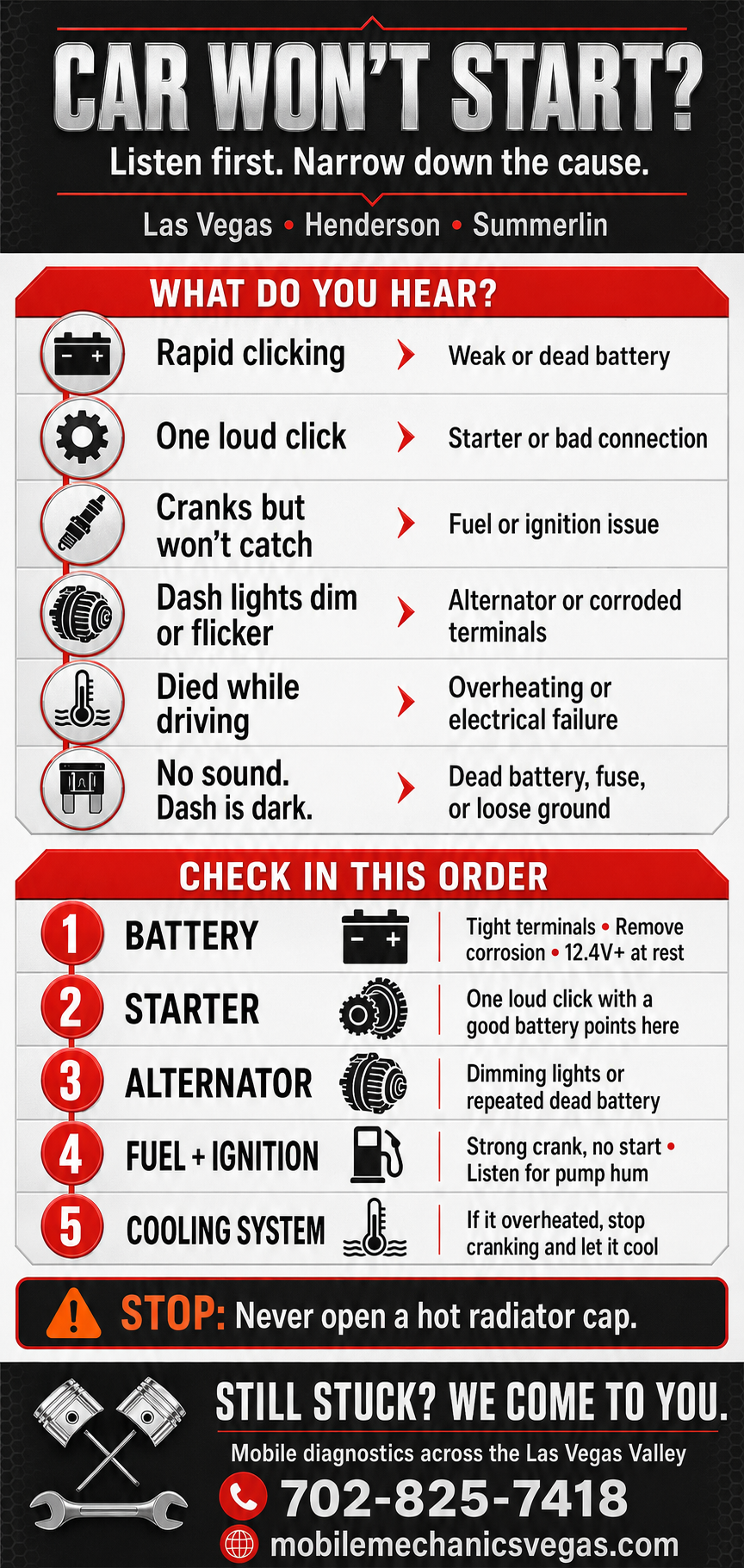
Turning the key and hearing nothing (or hearing a click, a whine, or a sluggish crank) is one of the most common calls we get across Las Vegas, Henderson, and Summerlin. The good news: most no-start problems trace back to just a handful of causes, and you can narrow it down in a few minutes before ever popping the hood. Here’s how to work through it in order, starting with the most likely culprit in our desert heat.
Las Vegas heat is brutal on batteries. Constant triple-digit temperatures break down internal components faster than cold climates ever would, so most batteries here only last two to three years instead of the five you might get elsewhere. Check for corrosion on the terminals (a white or greenish crust), make sure the cable clamps are tight, and if you have a multimeter, look for at least 12.4 volts at rest. Anything under 12 volts usually means the battery is on its way out or already dead.
Listen for the Starter
If the battery tests fine but you get a single loud click and nothing else, the starter motor or solenoid is the next suspect. A worn starter often struggles more after the car has been sitting in a hot garage or parking lot all day, since heat expands metal components and can cause intermittent contact issues. This isn’t something to diagnose by guesswork for long. If tapping the starter housing gets it to turn over once, that’s a strong sign it needs replacing soon.
Check the Alternator
The alternator keeps your battery charged while you drive. If it’s failing, the car might start fine in the morning but die later, or your battery might test fine while the alternator quietly isn’t recharging it. Dimming headlights at idle, a battery warning light, or a battery that keeps dying even after a jump are all signs the alternator, not the battery, is the real problem.
Fuel and Ignition Problems
If the engine cranks strong but won’t fire up, fuel or spark is missing from the equation. A clogged fuel filter, failing fuel pump, or worn spark plugs are common causes, especially in older vehicles that haven’t had routine maintenance. You can sometimes hear the fuel pump prime (a brief hum) when you turn the key to the on position. No hum at all can point to a dead fuel pump or a blown fuse.
Overheating Shutdowns
Summer driving around the valley puts real strain on cooling systems, especially in stop-and-go traffic on the Strip or idling in a hot parking lot. If your car stalled from overheating and now won’t restart, don’t keep cranking it. Let it cool fully, check the coolant level once it’s safe to touch the radiator cap, and have the cooling system inspected before driving further. Restarting an overheated engine repeatedly can cause serious damage.
System
Quick Check You Can Do
When to Call a Mechanic
Battery
Check terminals, test voltage
Voltage low, over 3 years old
Starter
Listen for clicks vs. silence
Single click, no crank
Alternator
Watch for dimming lights
Battery keeps dying after charging
Fuel System
Listen for fuel pump hum
Cranks but never starts
Cooling System
Check temp gauge, coolant level
Stalled from overheating
Not every no-start is a DIY fix, and in the Las Vegas heat, guessing wrong can turn a small issue into a stranded afternoon. If you’ve gone through these checks and your car still won’t start, our mobile mechanics can come to you, diagnose the exact cause, and get you back on the road without a tow.
Sometimes the issue isn’t any single part but a loose ground wire, a blown fuse, or corroded wiring from years of desert dust and heat cycling. Car electrical problems can be maddening because they’re intermittent. If your car starts sometimes and not others with no clear pattern, an electrical short or bad connection is often to blame, and it usually takes a trained eye with the right tools to track down.
When to Stop Troubleshooting and Call for Help
If you’ve checked the battery, listened for the starter, and still have no answers, it’s time to bring in a professional rather than keep draining a weak battery with repeated attempts. At Mobile Mechanics Las Vegas, we come straight to your driveway, workplace, or wherever you’re stuck anywhere in the Las Vegas valley, run a full diagnostic on site, and handle the repair without the hassle of a tow truck.
If your vehicle starts acting differently during a drive across Las Vegas, it is easy to hope the problem will go away on its own. Unfortunately, engine problems rarely fix themselves. The combination of extreme desert heat, stop-and-go traffic on Interstate 15, and long commutes throughout the Las Vegas Valley can quickly turn a small issue into an expensive repair.
Quick Answer
The most common warning signs of engine trouble include unusual noises, dashboard warning lights, rough idling, poor acceleration, excessive exhaust smoke, overheating, and fluid leaks. Recognizing these symptoms early allows drivers to address problems before they become major repairs or leave them stranded.
What Local Drivers Should Know
High summer temperatures throughout the Las Vegas Valley place additional stress on engines and cooling systems.
Dust from surrounding desert areas can clog air filters and reduce engine performance if maintenance is delayed.
Stop-and-go traffic along the Las Vegas Strip and major corridors increases engine temperatures and wear.
Regular inspections can often identify small problems before they become costly engine repairs.
Ignoring warning lights can lead to breakdowns that are much more expensive than early maintenance.
Why This Matters Locally
Engine reliability is especially important for drivers throughout Las Vegas because vehicles operate in one of the hottest climates in the country. Long periods of idling, frequent air conditioning use, and extreme pavement temperatures all increase the workload placed on an engine.
Drivers commuting between Summerlin, Henderson, North Las Vegas, Paradise, and Downtown Las Vegas often spend significant time in traffic. During the summer, cooling systems and engine components are pushed much harder than they would be in milder climates.
At Mobile Mechanics Las Vegas, we regularly help local drivers identify engine issues before they become roadside emergencies. Our goal is to bring professional diagnostics directly to your location while helping you understand what your vehicle is telling you.
Local Data and Field Observations
Professional field observations consistently show that overheating, cooling system failures, worn ignition components, clogged air filters, and neglected fluid maintenance are among the most common engine-related concerns for vehicles operating in Southern Nevada.
The area’s intense heat accelerates wear on rubber hoses, belts, seals, batteries, and cooling system components. Vehicles that receive regular inspections often avoid the larger repairs that result from prolonged overheating or neglected warning signs.
Local Impact
Engine problems affect more than vehicle performance. For Las Vegas residents, an unexpected breakdown can interrupt work, family schedules, or travel plans while exposing drivers to dangerous desert temperatures.
Business owners who depend on work vehicles can also experience lost productivity when engine issues force vehicles out of service unexpectedly. Early diagnosis often reduces downtime while preventing additional component damage.
Warning Signs of Engine Trouble
The most common warning signs of engine trouble are usually noticeable long before complete engine failure occurs.
1. Check Engine Light
A check engine light is one of the earliest indicators that something requires attention. While the cause may be relatively minor, it can also signal more significant mechanical or emissions-related problems.
2. Rough Idling
If your engine shakes, vibrates, or runs unevenly while stopped, it may indicate ignition problems, fuel delivery issues, vacuum leaks, or sensor failures.
3. Poor Acceleration
An engine that hesitates or struggles to gain speed may be experiencing fuel system problems, airflow restrictions, ignition issues, or transmission-related concerns.
4. Unusual Engine Noises
Knocking, ticking, grinding, or loud rattling noises should never be ignored. These sounds often indicate internal engine wear or components that require immediate inspection.
5. Excessive Exhaust Smoke
Blue, white, or black exhaust smoke can indicate oil burning, coolant leaks, or fuel mixture problems that require professional diagnosis.
6. Engine Overheating
If the temperature gauge climbs higher than normal or steam appears from under the hood, the engine may be overheating due to cooling system problems.
7. Fluid Leaks
Oil, coolant, or other engine fluids collecting beneath your vehicle can indicate failing seals, hoses, or gaskets.
When to Call a Professional
Engine warning signs should be evaluated promptly whenever they appear consistently or worsen over time.
Drivers can safely monitor fluid levels, dashboard gauges, and visible leaks. However, persistent warning lights, overheating, unusual noises, or repeated stalling should be inspected by a qualified mechanic.
In Las Vegas, delaying engine repairs during the hottest months increases the risk of severe overheating and additional engine damage.
Common Local Causes
Several local conditions contribute to engine problems throughout Southern Nevada.
Extreme Heat
High temperatures place continuous stress on cooling systems, engine oil, and electronic components.
Dust and Sand
Desert dust can clog engine air filters and reduce airflow, decreasing performance and fuel efficiency.
Heavy Traffic
Frequent stop-and-go driving generates additional engine heat while reducing airflow through the radiator.
Aging Cooling Systems
Radiators, hoses, water pumps, and thermostats naturally wear over time. Heat accelerates that aging process.
Delayed Maintenance
Skipping oil changes, coolant service, or filter replacements often leads to preventable engine wear.
Prevention and Maintenance
Preventing engine trouble starts with routine maintenance.
Regular oil changes help reduce internal engine wear while maintaining proper lubrication during extreme temperatures.
Cooling system inspections before summer can identify worn hoses, low coolant levels, or failing components before they cause overheating.
Air filters should be inspected regularly due to the dusty environment found throughout Clark County.
Drivers should also pay attention to dashboard warning lights instead of postponing inspections.
Expected Results
Routine maintenance and early diagnostics often improve engine performance, fuel efficiency, and long-term reliability.
When problems are identified early, repairs are typically less extensive than those involving overheating or internal engine damage. While every repair depends on the specific issue, prompt attention generally reduces both repair costs and downtime.
Common Mistakes
Mistake: Ignoring the check engine light.
Consequence: Small problems can develop into expensive repairs.
Better Approach: Schedule diagnostic testing as soon as the warning light appears.
Mistake: Continuing to drive an overheating vehicle.
Consequence: Severe engine damage may occur.
Better Approach: Stop driving safely and have the vehicle inspected immediately.
Mistake: Delaying oil changes.
Consequence: Increased engine wear and reduced lubrication.
Better Approach: Follow your manufacturer’s recommended maintenance schedule.
Common Local Scenario
A driver commuting between Henderson and Downtown Las Vegas notices the engine temperature gradually rising during afternoon traffic. At first, the issue only occurs during extended stops, but over several weeks the vehicle begins overheating more frequently.
An inspection reveals a deteriorating radiator hose and low coolant level. Addressing the issue early prevents significantly more expensive engine repairs that could have resulted from repeated overheating.
Related Service Solutions
Engine warning signs can often be addressed through services such as:
We proudly serve drivers throughout Las Vegas as well as Henderson, North Las Vegas, Paradise, Spring Valley, Summerlin, and surrounding communities across the Las Vegas Valley.
Our mobile service allows us to bring professional engine diagnostics directly to your location whenever possible.
Cost of Ignoring the Issue
Ignoring engine warning signs often leads to larger repairs, higher costs, and unexpected breakdowns.
Problems that begin as minor sensor failures, cooling system leaks, or ignition issues may eventually cause overheating or internal engine damage if left unresolved.
How quickly should I respond to a check engine light in Las Vegas?
Yes. A check engine light should be inspected as soon as practical. While some causes are minor, others can become more serious if ignored, especially during periods of extreme Las Vegas heat.
Can desert heat damage my engine?
Yes. High temperatures increase stress on cooling systems, engine oil, hoses, and other components. Proper maintenance helps reduce heat-related failures.
Why does my engine overheat in traffic around the Las Vegas Strip?
Heavy traffic limits airflow through the radiator while the engine continues producing heat. Cooling system problems often become more noticeable under these conditions.
Is rough idling always a serious problem?
Not always. Rough idling may result from spark plugs, sensors, vacuum leaks, or fuel delivery issues. A proper inspection determines the exact cause.
Should I continue driving if my engine starts knocking?
No. Engine knocking may indicate internal mechanical problems that can worsen quickly if the vehicle continues operating.
How often should drivers in Southern Nevada inspect their cooling systems?
Regular cooling system inspections before peak summer temperatures are a smart preventive measure. Following your vehicle manufacturer’s maintenance schedule is also recommended.
Can mobile mechanics diagnose engine problems?
Yes. Many engine diagnostics, inspections, and common repairs can be performed by experienced mobile mechanics at your home, workplace, or another convenient location.
Does desert dust affect engine performance?
Yes. Dust can restrict airflow by clogging engine air filters, reducing efficiency and performance if filters are not replaced regularly.
Closing
Recognizing the early warning signs of engine trouble can help you avoid expensive repairs, unexpected breakdowns, and unnecessary stress. Paying attention to changes in your vehicle’s performance allows problems to be diagnosed before they become much larger issues.
Get Trusted Mobile Engine Diagnostics in Las Vegas
Keep your vehicle running reliably with professional engine diagnostics brought directly to you.
Las Vegas is a city that never slows down. From the neon-lit Strip to the sprawling suburban neighborhoods of Summerlin and Henderson, people here are constantly on the move. Time is currency in this desert metropolis, and nobody wants to spend it sitting in a waiting room at a traditional auto shop, flipping through old magazines while their car gets serviced in the back. That shift in thinking is exactly why the mobile auto repair trend has taken hold so firmly in Southern Nevada.
More and more Las Vegas drivers are discovering that a certified mechanic can come directly to their home, office, or even a parking lot, and handle everything from oil changes to brake jobs without the customer ever leaving their comfort zone. What once seemed like a novelty has quietly grown into a legitimate, full-service alternative to brick-and-mortar repair shops. The city’s unique lifestyle, long commutes, and intense summer heat have created the perfect conditions for this new wave auto repair movement to thrive.
The Problem With Traditional Auto Shops in the Desert
Anyone who has lived in Las Vegas for more than a summer knows the struggle. Temperatures regularly climb past 110 degrees Fahrenheit between June and September, making it genuinely miserable to wait outside for a tow truck or sit in a stuffy waiting area. Traditional shops often have long backlogs, limited appointment windows, and the kind of upselling pressure that leaves customers feeling uneasy about what they are actually paying for.
Then there is the logistics problem. Las Vegas is geographically spread out in ways that surprise newcomers. Getting your car to a shop on the other side of the valley can mean an hour of driving in rush-hour traffic on the I-15 or the 215 Beltway. If the car is not drivable, you are looking at towing fees on top of repair costs. For working families, single parents, or anyone without a second vehicle to serve as a backup, a trip to the shop is a full-day ordeal that disrupts schedules, childcare arrangements, and work obligations.
This is the gap that mobile mechanics have stepped into with remarkable precision. By eliminating the need for a physical location, they cut overhead costs significantly and pass those savings along to the customer. The result is often faster service, more transparent pricing, and a more personal interaction between the mechanic and the vehicle owner.
How Fast Service Mechanics Are Changing Expectations
The fast service mechanics at the heart of this movement are not cutting corners. In fact, many of them are ASE-certified professionals who left traditional shops because they wanted more flexibility and a better way to serve customers directly. They arrive in fully equipped vans or trucks loaded with the diagnostic tools, parts, and fluids needed to handle a wide range of repairs on the spot.
Booking a mobile mechanic in Las Vegas today is often as simple as filling out an online form, describing the issue, and choosing a time slot that works for you. Many services provide upfront pricing before anyone even shows up at your door. That kind of transparency is a sharp contrast to the traditional shop experience, where the final bill sometimes bears little resemblance to the original estimate.
Response times have become a serious competitive advantage for mobile mechanics operating in the Las Vegas valley. Same-day appointments are common, and some providers have even moved toward two-hour response windows for urgent situations. For someone whose car will not start in a parking garage at work, that speed can make an enormous difference in how the rest of the day unfolds.
Word travels fast in Las Vegas, especially through community Facebook groups, Nextdoor forums, and Google reviews. When a mobile mechanic does a solid job at a fair price, that reputation spreads quickly through neighborhoods like Aliante, Green Valley, and Rhodes Ranch. The mobile auto repair trend here is largely driven by neighbor-to-neighbor recommendations, which is a testament to the quality that many of these independent operators are delivering.
What Can a Mobile Mechanic Actually Fix?
A common misconception is that mobile mechanics are only good for basic maintenance tasks. While oil changes, tire rotations, and battery replacements are certainly in their wheelhouse, the range of services has expanded considerably as the industry has matured.
Today’s mobile mechanics in Las Vegas regularly handle brake pad and rotor replacements, alternator and starter repairs, serpentine belt changes, spark plug replacements, fuel system services, and even air conditioning work, which is not a small thing in a city where a broken AC in July is practically a public health emergency. Many mobile mechanics also carry professional-grade OBD-II diagnostic scanners, allowing them to read check engine lights, clear codes, and identify problems with the same accuracy as a shop.
There are still some limitations to keep in mind. Major engine rebuilds, transmission overhauls, and suspension work that requires a lift are typically beyond what a mobile mechanic can do in a driveway or parking lot. However, studies of common repair needs suggest that the vast majority of routine and moderate repairs fall well within the capabilities of a well-equipped mobile technician. For Las Vegas drivers, that means a very large portion of their annual maintenance needs can be handled without ever visiting a shop.
The New Wave Auto Repair Culture Taking Root in Las Vegas
Las Vegas has always been a city comfortable with reinvention. Casinos rebrand, restaurants pivot, entertainment concepts rise and fall. That same entrepreneurial energy has found its way into the automotive service industry, and the new wave auto repair culture emerging here reflects broader national trends while taking on a distinctly local flavor.
Independent mobile mechanics in Las Vegas are building personal brands, maintaining professional websites, and cultivating loyal customer bases that follow them the way people follow a favorite barber or hairstylist. The relationship between a mobile mechanic and their regular clients tends to be more personal than what you get at a dealership service department, where you might see a different service advisor every time you visit.
There is also a growing emphasis on education within this community. Many mobile mechanics take the time to walk customers through what they found, what they fixed, and what to watch for going forward. That kind of transparency builds trust in a way that a service desk receipt never could. Customers leave not only with a repaired vehicle but with a better understanding of how to take care of it.
Technology is accelerating this shift as well. Apps and platforms designed specifically for connecting customers with mobile mechanics have made it easier to find qualified technicians, compare pricing, and read verified reviews. Subscription-based maintenance programs offered by some mobile services are also gaining traction, allowing drivers to pay a flat monthly fee for regular upkeep without any surprise costs.
The Road Ahead for Las Vegas Drivers
The mobile mechanic industry in Las Vegas is no longer a fringe option for people who stumbled upon it by accident. It has become a genuine, well-organized alternative to the traditional auto service experience, and it is only continuing to grow as awareness spreads and more skilled technicians enter the space.
For residents of one of America’s fastest-growing cities, convenience is not a luxury; it is a baseline expectation. Mobile mechanics meet that expectation in a way that fits the rhythm of modern Las Vegas life. Whether you are a busy professional in Summerlin, a gig economy worker in North Las Vegas, or a retiree in Henderson who simply does not want the hassle of a shop visit, mobile auto repair offers a practical, affordable, and increasingly reliable solution.
The next time your check engine light flickers on or your brakes start squealing, consider skipping the waiting room. Las Vegas has a better option parked right around the corner.
Need Mobile Mechanics Near You?
At Mobile Mechanics Las Vegas, we’re here to make auto repair simple, convenient, and stress-free by bringing the shop directly to you anywhere in Las Vegas, North Las Vegas, or Henderson. Whether it’s diagnostics, major repairs, brake or electrical issues, or even fleet, RV, or hydraulic service, our skilled team is ready to get you safely back on the road without the hassle of a shop visit. Don’t wait around; reach out to ustoday and experience the quality, reliability, and convenience that sets us apart!
Nevada is a state where the open road feels like a birthright. From the neon-lit streets of Las Vegas to the quiet stretches of Highway 50, often called “the Loneliest Road in America,” drivers here put serious miles on their vehicles. That means car maintenance and repairs are a constant reality for Nevadans. When something goes wrong under the hood, the question almost always comes up: do you roll up your sleeves and handle it yourself, or do you call a mobile mechanic to come to you?
Both paths have real merit, and the right answer depends on your situation, your skills, and what your car actually needs.
The Appeal of DIY Car Repairs in Nevada
There is a strong independent streak in Nevada culture, and that spirit extends to how many residents approach car maintenance. DIY car repair tips are everywhere online, and with the right YouTube tutorial and a decent set of tools, plenty of drivers successfully handle their own oil changes, brake pad replacements, air filter swaps, and battery installations.
The cost savings are one of the biggest draws. Labor costs at traditional shops can be steep, and in a state where many residents live far from city centers, even getting to a shop can be an inconvenience. Doing the work yourself eliminates the labor bill entirely, and for routine jobs, the parts alone are relatively affordable.
Nevada’s climate does add some unique considerations for the DIY route. Extreme heat in the southern part of the state can accelerate wear on belts, hoses, and coolant systems, meaning Nevadans often find themselves dealing with heat-related issues more frequently than drivers in cooler states. On the flip side, working outdoors in the summer heat can turn a simple repair into an exhausting ordeal, especially in cities like Las Vegas or Henderson where summer temperatures regularly exceed 110 degrees Fahrenheit.
For those living in rural areas like Elko, Winnemucca, or Ely, the DIY approach can feel less like a preference and more like a necessity. The nearest auto shop might be an hour away, and waiting days for a tow truck is not always practical. Having basic mechanical knowledge and a set of tools in the garage is genuinely valuable in these communities.
When a Mobile Mechanic Makes More Sense
Mobile mechanics have grown significantly in popularity over the past decade, and Nevada is a state that benefits from this service model in some very specific ways. A mobile mechanic comes to your home, your office, or wherever your car happens to be, eliminating the need to arrange rides or sit in a waiting room for hours.
When you compare mobile vs. DIY auto repair, one of the clearest advantages of the mobile mechanic is diagnostic capability. Modern vehicles are packed with complex computer systems, sensors, and software. Without an OBD-II scanner or the knowledge to interpret the results, DIY repairs on newer cars can quickly become guesswork. Mobile mechanics arrive with professional-grade diagnostic tools and the training to use them correctly.
For more involved repairs, such as alternator replacements, suspension work, or timing belt jobs, the skill gap between a trained technician and a well-meaning amateur can result in costly mistakes. A botched repair can damage surrounding components and turn a manageable bill into a serious expense. Mobile mechanics carry the liability of their work, which offers peace of mind that a self-repair simply cannot guarantee.
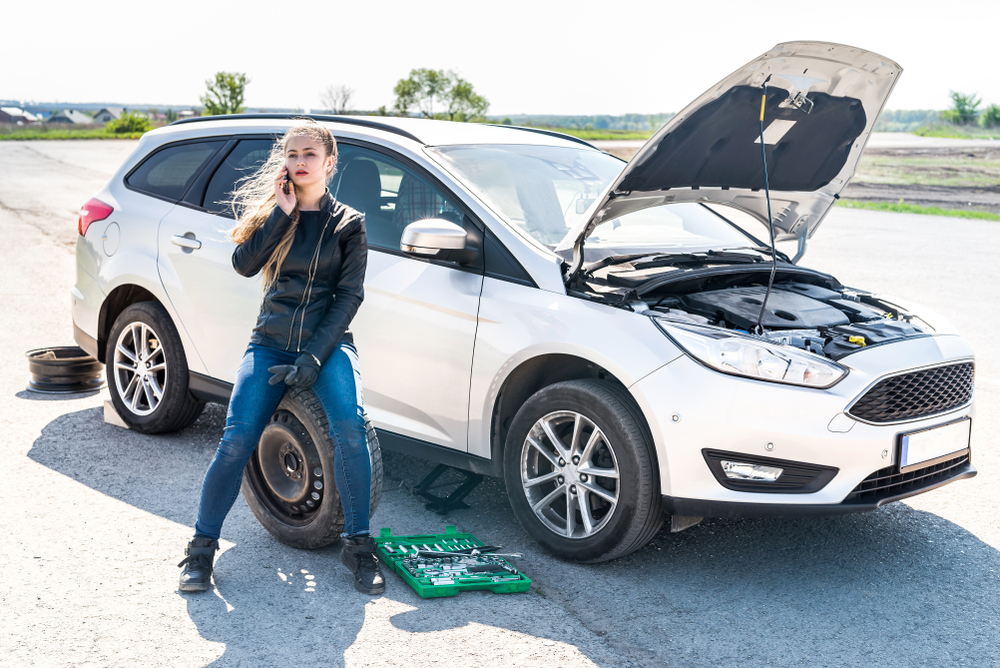
Nevada’s large stretches of remote highway also create breakdown scenarios where a mobile mechanic service is invaluable. If your car dies on Interstate 80 between Reno and Winnemucca, or on US-95 somewhere in Nye County, having access to a mobile mechanic can get you back on the road far faster than waiting for a traditional tow.
Cost Comparison: Mobile Mechanic Vs. DIY
Money is usually the central concern when drivers are weighing the mechanic vs. DIY debate. The honest answer is that neither option is universally cheaper. It depends on the job, your existing tools, and how confident you are in your abilities.
For basic maintenance tasks, such as oil changes, cabin air filter replacements, and wiper blade swaps, DIY is almost always less expensive. The parts are inexpensive, the process is straightforward, and the risk of making a costly error is low. A DIY oil change might cost you $40 to $60 in materials, while a mobile mechanic performing the same service might charge $80 to $120 depending on your location and vehicle type.
For mid-level repairs, the math starts to shift. Replacing brake pads and rotors yourself requires some mechanical comfort and specific tools like a C-clamp or brake piston tool. If you do not already own these, the tool investment changes your cost calculation. A mobile mechanic doing the same job typically charges for parts and labor, but the total is often not dramatically higher than what a DIYer pays once tools and the risk of error are factored in.
For complex repairs, mobile mechanics almost always represent better value because the risk of DIY errors is high. Transmission issues, electrical problems, and anything involving the engine internals should generally be left to professionals unless you have substantial training and experience.
The Middle Ground: Knowing Your Limits
The smartest approach for most Nevada drivers is not an all-or-nothing commitment to either side. Developing a practical understanding of which tasks are genuinely DIY-friendly and which ones call for a professional is the real skill worth cultivating.
Good DIY car repair tips consistently emphasize starting simple. Master your oil changes. Learn how to check and top off fluids. Get comfortable swapping out batteries and replacing basic wear items like air filters and wiper blades. These tasks build mechanical confidence and save real money over time without exposing you to significant risk.
At the same time, be honest with yourself about the limits of your knowledge. A repair done incorrectly does not just cost more money to fix later; it can also be a safety issue. Brakes, steering components, and suspension parts need to function correctly every single time. If there is any doubt, a mobile mechanic or a traditional shop is the right call.
Nevada’s geography also factors into the decision. If you live in a densely populated area like Las Vegas, North Las Vegas, Sparks, or Reno, you have access to both mobile mechanics and traditional shops with relative ease. If you live in a remote county, investing in your own mechanical skills and tools is a genuinely smart long-term strategy.
Finding the Right Mobile Mechanic in Nevada
If you decide that a mobile mechanic is the right choice for your situation, doing a bit of research before you book pays off. Look for technicians with verifiable certifications, particularly ASE (Automotive Service Excellence) credentials, which indicate that the mechanic has met nationally recognized standards for knowledge and skill.
Reading customer reviews on platforms like Google and Yelp gives you a realistic picture of what to expect. Pay attention to comments about punctuality, communication, and whether the repairs held up over time. Ask for itemized estimates before agreeing to any work so you know exactly what you are paying for and why.
In Nevada, mobile mechanic services are available throughout the major metro areas and are slowly expanding into mid-size cities. Platforms that connect drivers with vetted mobile mechanics have made it easier than ever to find reliable help without leaving your driveway.
The Road Ahead for Nevada Drivers
Ultimately, the choice between a mobile mechanic and DIY repairs is not a competition with a single winner. It is a practical decision that should be made on a job-by-job basis, guided by your skill level, your tools, your budget, and the complexity of the repair at hand. Nevada drivers who embrace this flexible mindset will spend less money, avoid unnecessary headaches, and keep their vehicles running reliably across some of the most demanding driving conditions in the country.
Need Mobile Mechanics Near You?
At Mobile Mechanics Las Vegas, we’re here to make auto repair simple, convenient, and stress-free by bringing the shop directly to you anywhere in Las Vegas, North Las Vegas, or Henderson. Whether it’s diagnostics, major repairs, brake or electrical issues, or even fleet, RV, or hydraulic service, our skilled team is ready to get you safely back on the road without the hassle of a shop visit. Don’t wait around; reach out to ustoday and experience the quality, reliability, and convenience that sets us apart!