

DIY or Call a Pro? When to Seek Professional Help for Steering Repairs
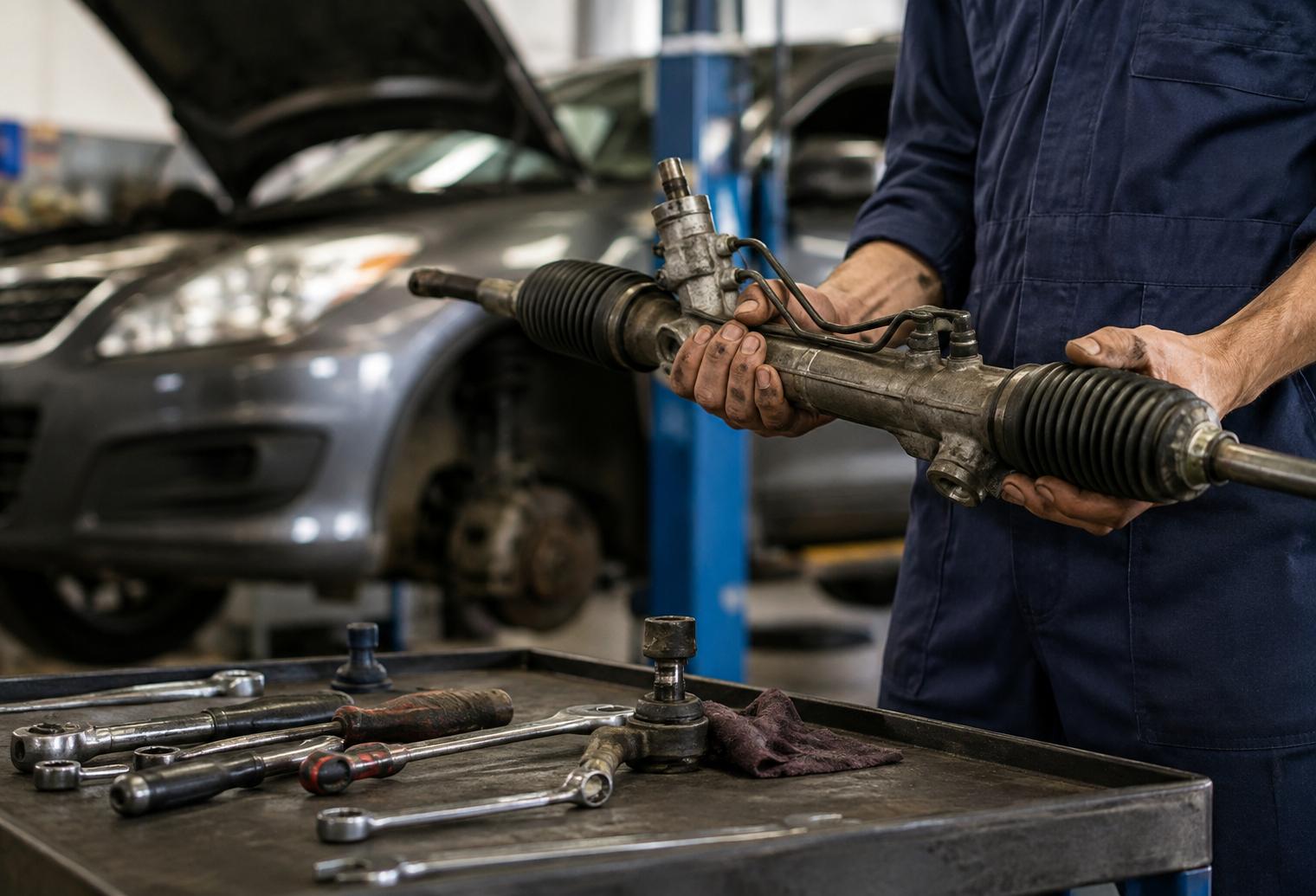
A steering problem can turn an ordinary drive across Las Vegas into a stressful one, especially in heavy traffic on I-15, US-95, or busy surface streets. Heat, road wear, dust, and daily stop-and-go driving can all add strain to steering and suspension components over time.
Quick answer: Basic steering checks such as monitoring power steering fluid, checking tire pressure, and noticing changes in steering feel are reasonable DIY tasks. Actual steering repairs are usually better left to a professional because the system directly affects vehicle control and safety. If the wheel feels loose, becomes difficult to turn, pulls unexpectedly, makes grinding or clunking noises, or steering fluid is leaking, a professional inspection is the safer next step.
What local drivers should know
-
A sudden change in steering effort, response, or stability should be investigated rather than ignored.
-
Extreme Southern Nevada heat can accelerate deterioration of rubber components, seals, hoses, and fluids.
-
Rough pavement, potholes, curbs, and road debris around Clark County can contribute to steering or suspension wear.
-
Checking tire pressure and looking for visible leaks can help identify a problem, but those checks do not replace diagnosis.
-
Steering components are safety-critical, so repairs that involve disassembly, hydraulic systems, electronic steering, or alignment should generally be handled professionally.
Why Do Steering Problems Matter for Las Vegas Drivers?
Steering problems matter for Las Vegas drivers because reliable vehicle control is essential in high-speed freeway traffic, congested intersections, and extreme summer conditions. A small amount of looseness or delayed steering response can become much more noticeable when changing lanes, avoiding road debris, or maneuvering through dense traffic.
Southern Nevada driving also puts vehicles through demanding conditions. Summer pavement temperatures can be severe, while dust and dry conditions are common throughout the valley. Drivers traveling between Summerlin, Paradise, Spring Valley, North Las Vegas, and Henderson may encounter a combination of freeway miles, stop-and-go traffic, construction zones, and uneven pavement.
Mobile Mechanics Las Vegas helps local drivers address vehicle problems where mobile service is appropriate. After this first mention, we focus on helping customers understand what may be happening, which checks are reasonable, and when a steering concern needs professional attention.
What Local Conditions Can Contribute to Steering Wear?
Local steering wear can be influenced by extreme heat, rough roads, frequent driving, dust exposure, and impacts from potholes or curbs. These conditions do not automatically cause steering failure, but they can increase stress on components that are already aging or worn.
In Southern Nevada, prolonged heat can be hard on rubber boots, seals, hoses, and certain fluids. Dry conditions and road dust can also collect around exposed suspension and steering areas.
Road conditions matter as well. Hitting a pothole, curb, or broken pavement can affect tie rods, steering linkage, wheels, tires, or alignment. Drivers who regularly travel construction-heavy routes around Clark County may notice pulling, uneven tire wear, or changes in steering feel after a significant impact.
These are general mechanical observations rather than claims that every local vehicle will experience the same problems.
How Can a Steering Problem Affect Your Vehicle?
A steering problem can affect control, tire wear, handling, driver confidence, and the ability to respond quickly to changing road conditions. Depending on the cause, a vehicle may become harder to turn, wander in its lane, pull to one side, or respond inconsistently to steering input.
Some steering concerns are connected to other systems. A damaged tie rod can affect alignment. Incorrect tire pressure can make steering feel unusual. Worn suspension components may create symptoms that feel like a steering problem.
Because several issues can produce similar symptoms, replacing a part based only on a noise or steering sensation can lead to unnecessary expense without solving the original problem.
What Are the Warning Signs of Steering Trouble?
Common steering warning signs include unusual resistance, looseness, pulling, fluid leaks, noises, vibration, and delayed response from the steering wheel. Drivers should pay particular attention when a symptom appears suddenly or becomes noticeably worse.
Watch for:
-
The steering wheel becoming unusually hard to turn.
-
Excessive free play or looseness in the steering wheel.
-
The vehicle wandering or pulling while driving on a reasonably level road.
-
Clunking, popping, whining, squealing, or grinding during turns.
-
Visible fluid underneath the front portion of the vehicle.
-
Steering-wheel vibration that was not present before.
-
Uneven or unusually rapid tire wear.
-
A steering or power steering warning light appearing on the dashboard.
A warning sign does not identify the failed component by itself. Diagnosis is what separates a tire, alignment, suspension, hydraulic, or steering-system issue.
When Should You Call a Professional for Steering Repairs?
You should call a professional when steering performance changes noticeably, a leak is present, parts appear loose or damaged, warning lights appear, or the vehicle no longer feels predictable to control. Basic observation is useful, but steering-system disassembly and repair are generally not good trial-and-error DIY projects.
A driver can safely check tire pressure according to the vehicle’s recommended specifications, inspect the ground for obvious leaks, and note exactly when noises or handling changes occur.
Professional help becomes more appropriate when the repair could involve tie rods, a steering rack, power steering hoses, a pump, electronic power steering components, steering linkage, or related suspension parts. If the vehicle feels unsafe to control, avoid treating the trip to a repair facility as a test drive.
What Are Common Causes of Steering Problems in Southern Nevada?
Common causes of steering problems include tire issues, alignment changes, worn linkage, leaking hydraulic components, aging steering parts, and related suspension wear. Local heat and road conditions can contribute to how quickly existing wear becomes noticeable.
1. Tire pressure or tire damage: Low pressure, uneven wear, or a damaged tire can cause pulling and heavier steering.
2. Alignment changes: A pothole or curb impact can alter alignment and make a vehicle pull or feel unstable.
3. Worn tie rods or linkage: Wear in components connecting steering input to the wheels can create looseness, clunking, or inaccurate response.
4. Power steering fluid leaks: Vehicles with hydraulic power steering may become difficult or noisy to steer when fluid is lost.
5. Steering rack or pump problems: Internal steering-system problems can produce leaks, inconsistent assistance, noise, or increased effort.
6. Suspension wear: Ball joints, control-arm components, bushings, and other suspension parts can create handling symptoms that resemble steering trouble.
What Steering Maintenance Can You Do Yourself?
DIY steering maintenance should focus on observation, tire care, fluid checks when applicable, and catching changes before they become larger problems. These simple checks are especially useful before long drives across the valley or during periods of intense summer heat.
Check tire pressure regularly and inspect tires for unusual wear. If your vehicle uses serviceable power steering fluid, check the level according to the owner’s manual and use only the specified fluid type.
Look underneath the vehicle for new leaks and pay attention to changes in steering feel. If you hit a significant pothole or curb, monitor the vehicle for pulling, vibration, an off-center steering wheel, or new noises.
DIY work should stop when diagnosis requires lifting the vehicle, separating steering components, disturbing safety-critical fasteners, working with electronic steering systems, or performing an alignment.
What Results Should You Expect From Professional Steering Repair?
Professional steering repair should aim to identify the actual source of the symptom and restore predictable steering operation based on the condition of the vehicle. The exact repair depends on whether the problem comes from tires, alignment, steering components, suspension parts, hydraulic assistance, or an electronic system.
A proper diagnosis can also uncover related concerns. For example, replacing a worn steering component may be only part of the solution if alignment or tire wear has also been affected.
No legitimate repair should be expected to correct unrelated mechanical problems, which is why diagnosis before parts replacement is valuable.
What DIY Steering Repair Mistakes Should Drivers Avoid?
The biggest DIY steering mistakes are guessing at the failed part, ignoring related components, using incorrect fluids, and continuing to drive despite worsening symptoms. These mistakes can increase repair costs or leave the original safety concern unresolved.
Mistake: Replacing a component because an online video showed similar symptoms.
Consequence: Several steering and suspension faults can feel alike.
Better approach: Diagnose the source before buying parts.
Mistake: Adding whatever power steering fluid is available.
Consequence: Fluid requirements vary by vehicle.
Better approach: Verify the manufacturer’s specification first.
Mistake: Assuming pulling always means the steering rack is failing.
Consequence: Tire pressure, alignment, tire damage, and suspension wear can also cause pulling.
Better approach: Check the complete steering, tire, and suspension picture.
Mistake: Continuing to drive as looseness or steering effort increases.
Consequence: A controllability problem can become more serious.
Better approach: Arrange an inspection when the vehicle’s handling changes significantly.
What Is a Common Local Steering-Repair Scenario?
A common local scenario is a driver noticing new pulling, vibration, or an off-center steering wheel after striking rough pavement or a pothole. This does not automatically mean a major steering component has failed, but an impact can affect tires, wheels, alignment, steering linkage, or suspension components.
For example, a driver commuting between Henderson and central Las Vegas might notice the vehicle no longer tracks straight after a hard road impact. Checking tire pressure is a sensible first step. If the symptom remains, a professional inspection can identify whether alignment or damaged components are involved.
This is an illustrative local scenario, not a customer case study.
Which Services Can Help Resolve Steering Problems?
Steering problems may require diagnostic service, steering-component repair, suspension inspection, fluid-leak diagnosis, or related mechanical repairs depending on the cause. The right service should follow the symptom rather than assuming a specific part needs replacement.
We can help evaluate vehicle concerns and determine which repairs are appropriate for mobile service. Some situations may require equipment or procedures better suited to a repair facility, particularly when specialized alignment or other shop-based equipment is necessary.
Is DIY Steering Repair Better Than Calling a Professional?
DIY checks are useful for simple observations, but professional diagnosis is the better choice when steering components, vehicle control, or safety are involved. The dividing line is whether the task involves basic monitoring or an actual repair to a system that determines where the vehicle goes.
DIY makes sense for checking tire pressure, observing fluid levels, inspecting for obvious leaks, and documenting symptoms.
Calling a professional makes more sense for persistent pulling, loose steering, leaks, steering noises, damaged linkage, electronic power steering warnings, or any situation where parts must be removed or adjusted.
For most Las Vegas drivers, the potential savings of guessing at a steering repair are difficult to justify if an incorrect repair leaves the original problem unresolved.
What Areas Can Receive Local Steering-Repair Help?
Local steering-repair assistance may be available throughout the Las Vegas area depending on the vehicle, location, and type of service required. Our service area can include communities across the valley, with drivers in areas such as Summerlin, Spring Valley, Paradise, and surrounding Clark County communities seeking help for vehicle concerns.
Drivers in nearby Henderson or North Las Vegas should confirm service availability for their specific location and repair need.
What Can Happen If You Ignore a Steering Problem?
Ignoring a steering problem can lead to worsening handling, uneven tire wear, additional component stress, or a more serious loss of predictable vehicle control. The risk depends on the failed component, but waiting is rarely useful when the symptom is becoming more noticeable.
A minor alignment issue may accelerate tire wear. A leaking hydraulic system can lose additional fluid. Worn linkage may develop more movement. In busy Southern Nevada traffic, predictable steering response matters every time a driver merges, turns, brakes, or avoids an obstacle.
Frequently Asked Questions About Steering Repairs
These common steering-repair questions can help Las Vegas drivers decide what they can check themselves and when professional diagnosis is appropriate.
Can I drive with a steering problem in Las Vegas?
You should avoid driving if the vehicle is difficult to steer, unusually loose, unpredictable, or clearly unsafe to control. Minor symptoms still deserve attention because steering problems can worsen. If you are unsure whether the vehicle is safe to move through local traffic, professional guidance is preferable to using a drive as a diagnostic test.
Does Las Vegas heat damage power steering systems?
Extreme heat can contribute to deterioration of fluids, hoses, seals, rubber components, and other aging vehicle parts. Heat alone does not prove why a steering system is malfunctioning, but Southern Nevada conditions can add stress to components. Visible leaks, noise, or increased steering effort should be diagnosed rather than attributed to temperature alone.
Why is my steering wheel suddenly hard to turn?
A steering wheel can become hard to turn because of low tire pressure, a hydraulic power steering problem, a fluid leak, a failed pump, an electronic steering fault, or another mechanical issue. Because some causes can affect vehicle control, a sudden or severe increase in steering effort should be inspected promptly.
Can a Las Vegas pothole cause steering problems?
Yes, a strong pothole or curb impact can affect tires, wheels, alignment, steering linkage, or suspension components. After a hard impact, watch for pulling, vibration, an off-center steering wheel, unusual noises, or changes in handling. Persistent symptoms should be professionally inspected so damaged parts are not mistaken for a simple alignment issue.
Is a power steering fluid leak a DIY repair?
Finding the source of a power steering fluid leak is usually more important than simply adding fluid. A leak may come from a hose, fitting, pump, rack, or another component. Drivers can monitor the fluid level where appropriate, but repairing the leak typically requires proper diagnosis, parts, tools, and safe working procedures.
Why does my vehicle pull on roads around Clark County?
Pulling can result from tire pressure differences, tire wear, alignment problems, steering wear, suspension issues, or road surface conditions. If your vehicle repeatedly pulls on different roads rather than only on a noticeably crowned roadway, check the tires first and consider a professional steering, suspension, and alignment evaluation.
Should I repair steering components myself to save money?
DIY steering repairs can create false savings if the wrong component is replaced or the vehicle requires alignment afterward. Basic checks are worthwhile, but safety-critical components should be diagnosed correctly. For local drivers who depend on their vehicles for commuting across the valley, reliable steering is more important than experimenting with parts.
Do steering repairs always require a repair shop?
Not every steering-related concern necessarily requires traditional shop service. Some inspection and repair work may be suitable for mobile service, while alignment procedures or certain specialized repairs can require shop equipment. We can help determine what type of service makes sense based on the symptoms, vehicle, and suspected problem.
Make Your Next Drive Feel Predictable Again
Addressing steering concerns early can help protect predictable handling on Las Vegas streets and freeways. We focus on identifying the problem, explaining the available repair path, and helping local drivers determine whether mobile service fits the job.